
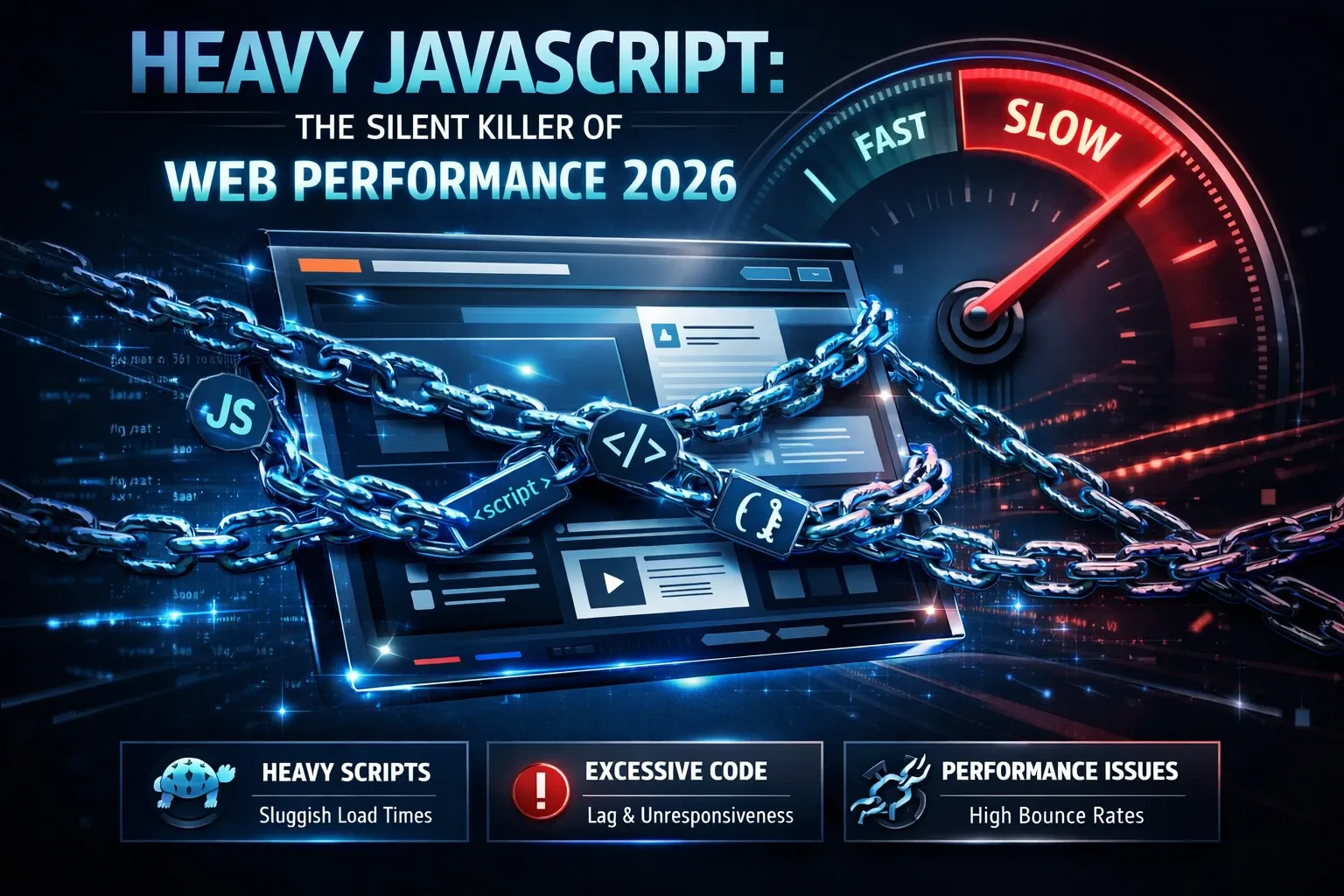
Heavy JavaScript: The Silent Performance Killer in 2026 (And How to Tame It)
Do you remember the good old days when the web was just HTML, CSS, and a sprinkle of jQuery to animate menus?
Those days are gone. Today, we ship a "full application" to the browser on every visit. We send React, analytics libraries, ads, video players... And the result? The site appears quickly, but when you try to tap the "Menu" button, nothing happens for two seconds.
You tap angrily, and nothing moves. This is the "Silent Killer." It's not slow loading, it's slow interactivity.
The "Zombie" Problem (A.K.A. Hydration)
Let me explain the problem simply. When you use modern frameworks (like old Next.js or React), the server sends a full HTML page. It looks ready, right?
But in reality, it's "dead." It's just a picture.
The browser needs to download a ton of JavaScript to "wake up" this page and attach buttons to functions. This process is called Hydration. And the moment this JS loads, the browser freezes completely, just like an old computer trying to run a modern game.
Google Doesn't Forgive: Welcome to INP
In 2026, Google replaced the old FID metric with a terrifying new one called INP (Interaction to Next Paint). Simply put: Google measures the "worst delay" a user faced when clicking. If your site is unresponsive because of too much JS, you are out of the race.
The Tech Fix: How to Cage the Beast?
As a developer who has suffered from this, here are the solutions that actually work today, far from the boring conventional tips:
1. Islands Architecture
Why ship JS for the whole page when the only interactive part is the "Buy Button"?
Want to Improve Your Website Performance?
Get a free comprehensive analysis of your site speed and SEO performance in seconds
Technologies like Astro allow you to build a super-fast static HTML page, and load JavaScript only for the small "island" that needs it (like a menu or contact form). The result? A page as light as a feather.
2. "Resumability" Instead of "Replaying"
Here we talk about Qwik. Instead of forcing the browser to re-run all the code (Hydration), this tech allows the browser to "resume" work from where the server left off. Think of it like pausing a movie and resuming from the same second, instead of restarting from the beginning.
3. Evict Third Parties (Web Workers)
Tracking scripts (Google Analytics, Facebook Pixel) are performance's worst nightmare. The solution?
// The Magic Fix: Partytown
Use the Partytown library to move all third-party scripts to run in a background thread (Web Worker).
Result: The Main Thread stays free to serve the user.
The Takeaway
The web can no longer handle more heavy scripts. In 2026, skill isn't about using the newest JS framework, but using the least amount of it possible. Let HTML do the heavy lifting, and leave JS for absolute necessities. Your phone and your users will thank you.



No comments yet. Be the first to comment!