
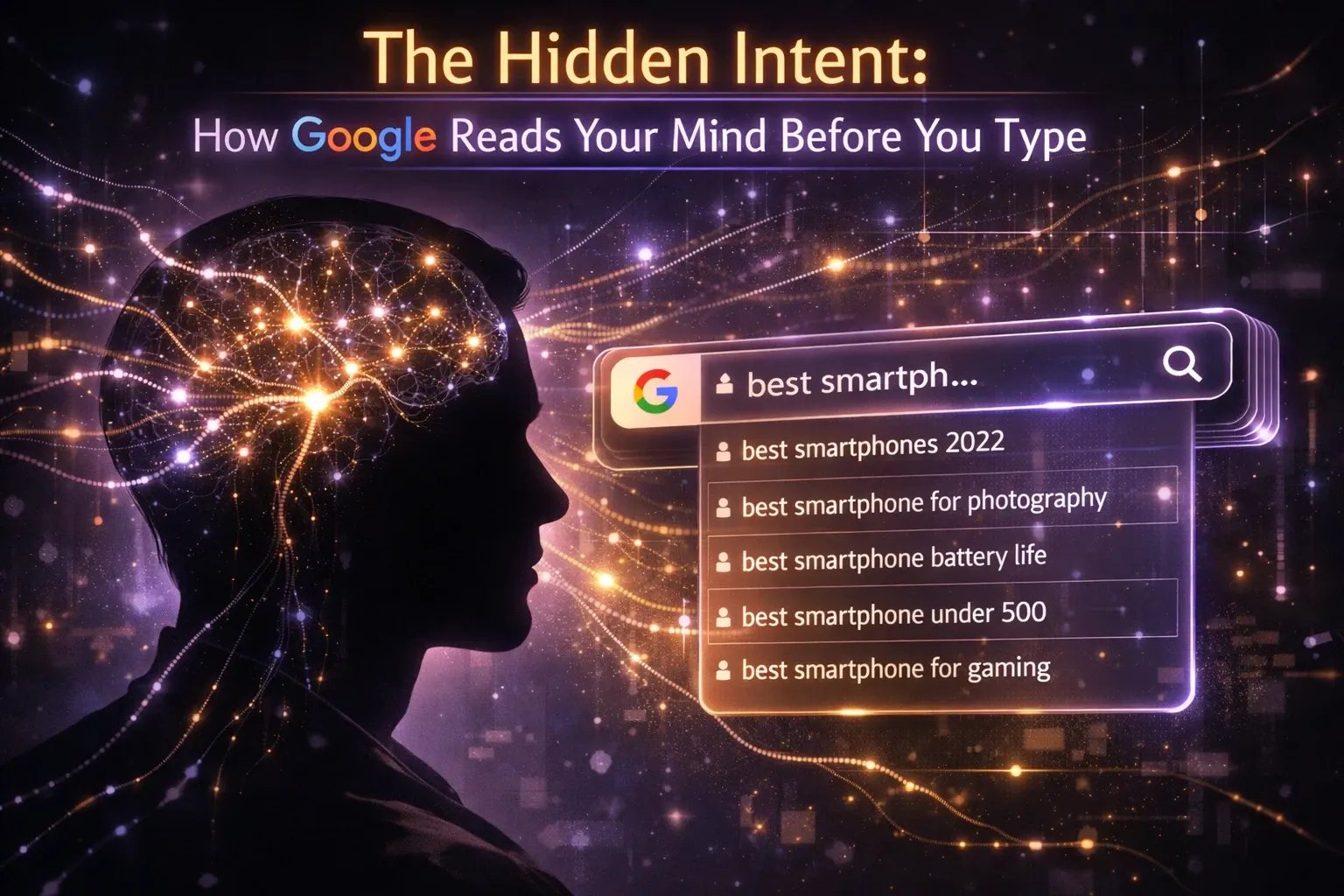
Picture this scenario: You walk into an electronics store and stand in front of the camera section. You haven't said a single word, but the smart salesperson walks up to you and says, "Are you looking for a camera to film your travel vlogs?"
How did they know?
Maybe because they saw your backpack, or because you were staring specifically at the "waterproof" action cameras. That salesperson didn't listen to your words; they read your hidden intent.
Today, Google is that salesperson, but a million times smarter. It doesn't care nearly as much about what you "type" in the search box as it does about what you *want* but haven't said.
The End of the "Keyword" Era and the Rise of "Meaning"
Let's be blunt: traditional search is dumb. In the past, if you searched for "knee pain," Google gave you articles that contained the phrase "knee pain" 50 times. The result? Shallow, repetitive, and boring content.
Today, if you search for the same term, Google thinks: "Hmm, this person probably wants a home remedy, or maybe they're worried about a torn meniscus, or maybe they need to know if they should see a doctor."
It's reading between the lines.
How the Magic Works? (Semantic Search Simplified)
It's not magic, it's the Semantic Web. Imagine that for Google, words are no longer just strings of letters, but connected "Entities."
- If you type "Apple," Google knows whether you mean the fruit or the tech giant based on your search history and location.
- If you search for "best laptop," it knows you are in the Transactional buying phase, not looking for the history of computer invention.
How to Write for a Mind Reader? (The Hidden Intent Strategy)
Here is where 90% of content writers fail. They write to answer the "Typed Question" and completely ignore the "Silent Question."
Want to Improve Your Website Performance?
Get a free comprehensive analysis of your site speed and SEO performance in seconds
Real-Life Example:
Someone searches for "iPhone 16 price."
Average Writer: Writes a table of prices from different stores.
Smart Writer (You): Knows the hidden intent is "is it worth the price?". So, they write about the price, but add a section: "Is it worth upgrading from iPhone 15?" or "Best cheaper alternative with same specs."
1. Answer the Question They Haven't Asked Yet
When you write, ask yourself: "What is the *next* step for this reader?" If they are reading about "how to start a blog," the inevitable next question in their head is "how do I make money from it?" or "what should I write about?". Don't make them search again—give them the answer right there.
2. Cover the Topic, Not the Word
Google loves Topical Authority. Instead of writing 5 short articles on the same topic with slightly different keywords, write one comprehensive guide that covers every angle. Make the reader close all their other tabs because they found everything they need right here.
3. Natural Language Wins
Stop writing like a robot trying to translate a textbook. Write like you speak. Google understands slang, it understands humor, and it understands local context. The more "human" you are, the better the AI understands you.
The Takeaway
Ranking #1 in 2026 isn't about being the best at "choosing keywords," it's about being the best at "understanding humans." When you satisfy a user's need that they haven't even voiced, you don't just win a visit... you win their trust.
So, are you ready to stop chasing keywords and start chasing intent?



No comments yet. Be the first to comment!