
The UX-SEO Connection
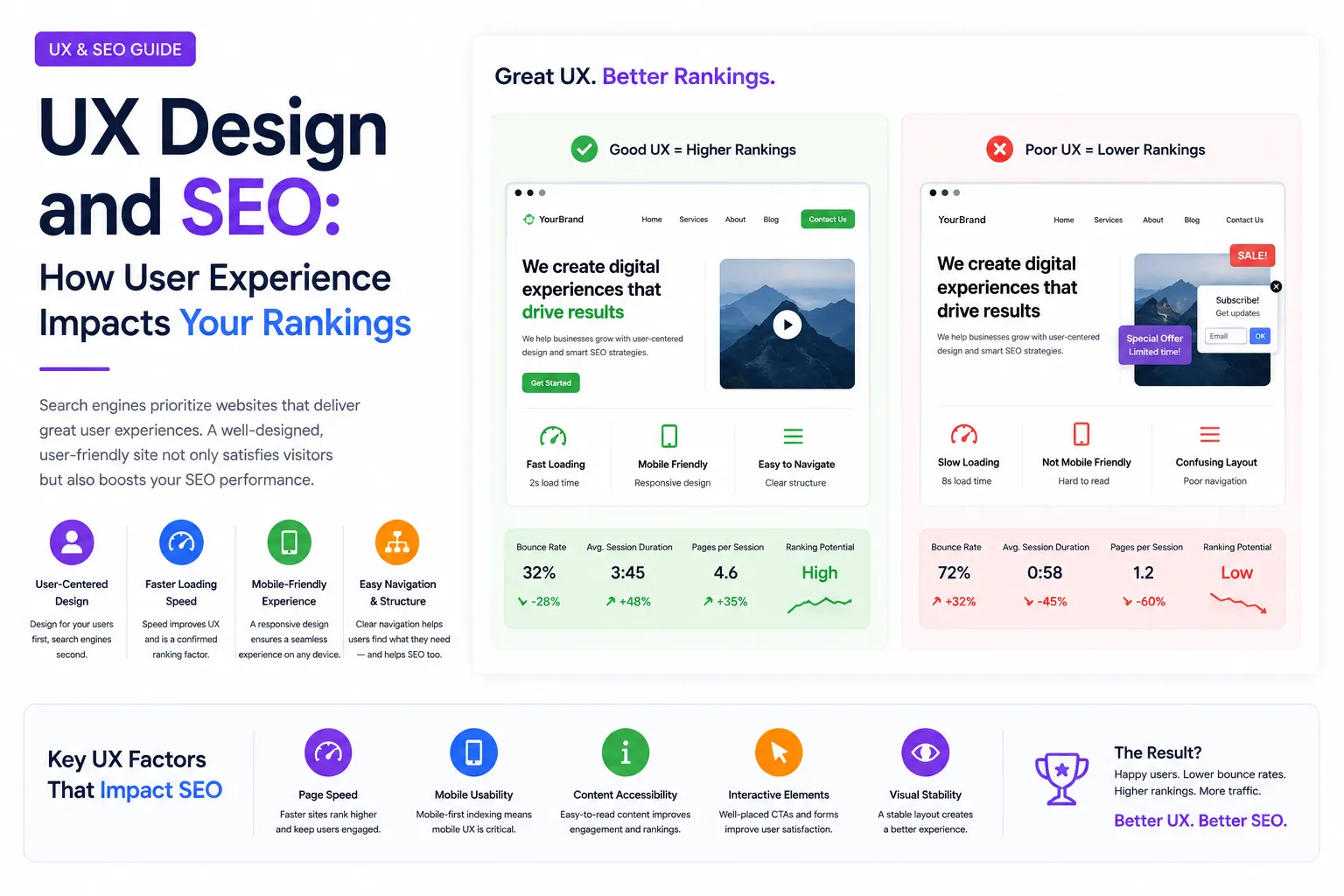
Google's ultimate goal is to provide users with the best possible search experience. This means ranking websites that provide excellent user experiences. In 2026, UX signals are more important than ever as ranking factors.
Google measures user experience through:
- Core Web Vitals (loading, interactivity, visual stability)
- Mobile usability
- Page experience signals
- User engagement metrics (time on site, pages per session)
Key UX Factors That Impact SEO
Page Speed and Performance
Slow pages frustrate users and increase bounce rates. Google measures this through Core Web Vitals. Every second of delay reduces conversions by 7% and increases bounce rates significantly.
Mobile Usability
With mobile-first indexing, mobile UX is critical. Ensure:
- Text is readable without zooming
- Buttons and links are easy to tap
- Content fits the screen without horizontal scrolling
- Forms are easy to fill on mobile
Navigation and Information Architecture
Clear, intuitive navigation helps users find what they need quickly. Good navigation also helps search engines understand your site structure.
- Use clear, descriptive menu labels
- Implement breadcrumbs for deep pages
- Include a search function for large sites
- Ensure important pages are accessible within 3 clicks
Content Readability
Content that's easy to read keeps users engaged longer:
Want to Improve Your Website Performance?
Get a free comprehensive analysis of your site speed and SEO performance in seconds
- Use short paragraphs (3-4 sentences maximum)
- Include subheadings to break up content
- Use bullet points and numbered lists
- Include relevant images and visuals
- Use sufficient font size (16px minimum)
Reducing Bounce Rate
A high bounce rate (users leaving after viewing only one page) can signal poor user experience. Reduce bounce rate by:
- Ensuring content matches search intent
- Improving page load speed
- Adding internal links to related content
- Using engaging visuals and multimedia
- Making your value proposition clear immediately
Accessibility and SEO
Web accessibility (making your site usable by people with disabilities) overlaps significantly with SEO best practices:
- Alt text for images (helps both screen readers and search engines)
- Proper heading hierarchy
- Sufficient color contrast
- Keyboard navigation support
- Descriptive link text
Conclusion
Great UX and great SEO are not separate goals — they're the same goal. By creating websites that users love, you naturally satisfy Google's ranking criteria. Focus on speed, mobile usability, clear navigation, and engaging content. Use PulsrWeb's comprehensive audit to identify UX issues that may be hurting your rankings.



No comments yet. Be the first to comment!